


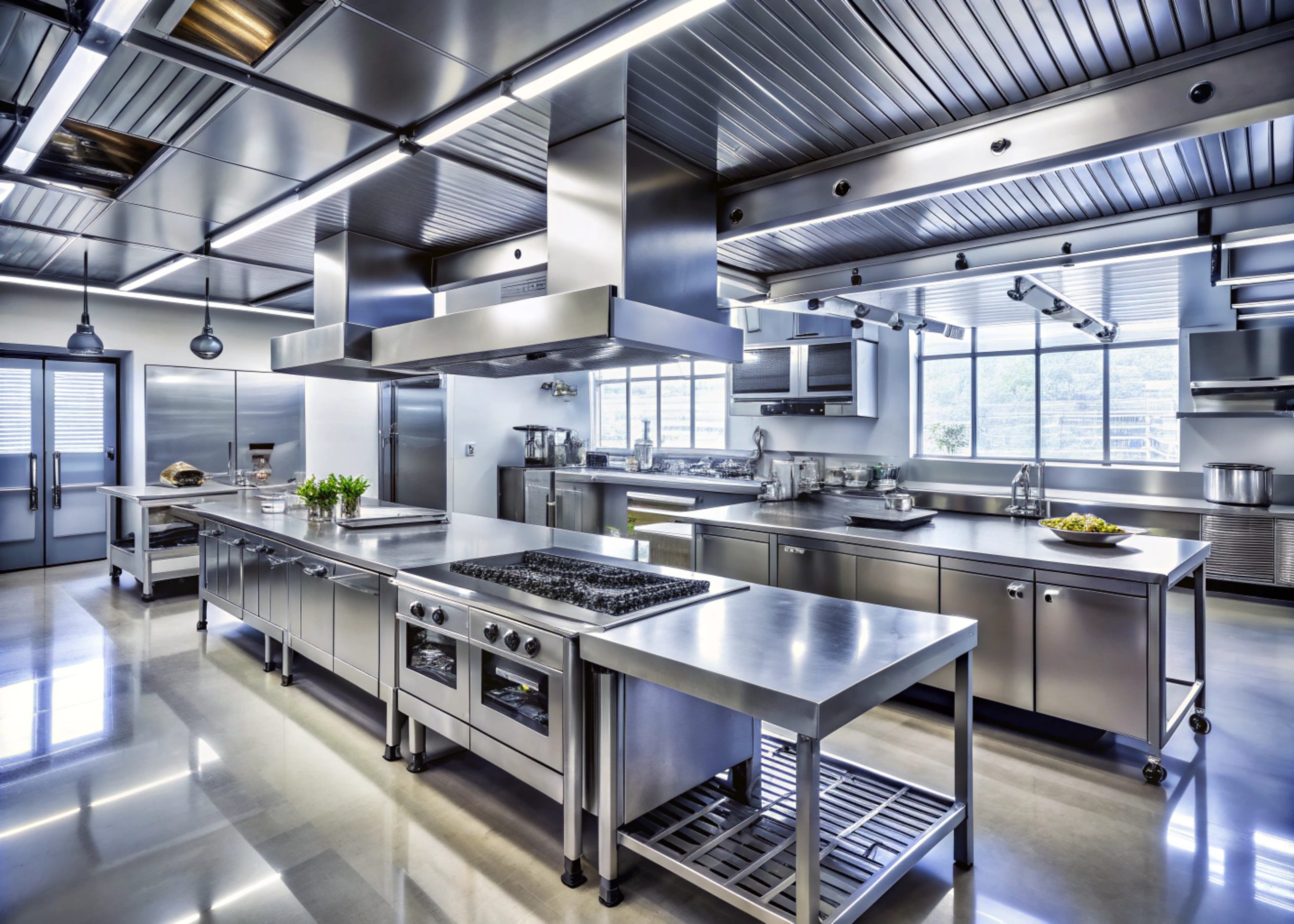
As technology advances and sustainability demands intensify, commercial kitchen design is evolving rapidly. Here are the key trends transforming how food service operations approach their workspace planning.
The commercial kitchen of 2025 looks dramatically different from its predecessors. Gone are the days when functionality alone dictated design decisions. Today’s food service operators are balancing efficiency, sustainability, technology integration, and staff wellbeing in ways that are reshaping the entire industry.
From Cape Town’s bustling restaurant scene to Johannesburg’s corporate catering operations, South African commercial kitchens are embracing design trends that promise improved performance, reduced environmental impact, and enhanced operational flexibility. Here are the five key trends defining commercial kitchen design this year.
1. SMART TECHNOLOGY INTEGRATION: THE CONNECTED KITCHEN REVOLUTION
The Internet of Things (IoT) has finally found its stride in commercial kitchens, moving beyond novelty to become an operational necessity. Smart technology is transforming how South African food service operations monitor, control, and optimise their kitchen performance.
Key smart technologies reshaping kitchens include:
- Remote temperature monitoring for ovens, ingredients, and cold storage environments, ensuring food safety compliance even when managers aren’t on-site
- Automated cooking systems that deliver consistent results whilst reducing labour demands
- Intelligent dishwashing systems that adjust cycles based on soil levels and dish types
- Inventory management platforms with automated stock replenishment, crucial for managing South Africa’s complex supply chains
These technologies offer particular value in South Africa’s challenging operating environment, where load shedding and supply chain disruptions require more sophisticated monitoring and control systems. Smart appliances can alert managers to temperature fluctuations during power outages and automatically adjust operations when electricity returns.
The business case is compelling: operations using smart technology report notable reductions in food waste and energy consumption, along with labour cost savings as staff can focus on higher-value tasks rather than constant monitoring.
2. SUSTAINABILITY-FIRST DESIGN: MEETING ENVIRONMENTAL AND ECONOMIC GOALS
With South Africa’s energy challenges and increasing environmental consciousness, sustainable kitchen design has moved from optional to essential. Forward-thinking operators are discovering that eco-friendly choices deliver both environmental and financial benefits.
The sustainability approach encompasses four key areas:
- Energy sources: Solar power integration is becoming standard, particularly given South Africa’s excellent solar potential and ongoing electricity challenges. Many operations are achieving grid independence during peak daylight hours.
- Environmental systems: Improved insulation, efficient HVAC systems, and advanced heat recovery systems are reducing energy consumption whilst creating more comfortable working environments. This is particularly crucial in South Africa’s diverse climate zones.
- Equipment selection: Energy-efficient appliances with high star ratings are becoming the norm, with industry experts suggesting favourable payback periods given current electricity tariffs.
- Operational training: Staff education on sustainability practices, from equipment usage to waste reduction, is proving essential for achieving sustainability targets.
The trend extends beyond equipment to encompass waste management systems, water conservation measures, and local sourcing strategies that reduce transportation impacts whilst supporting South African suppliers.
3. MODULAR KITCHEN SYSTEMS: FLEXIBILITY FOR UNCERTAIN TIMES
The past few years have taught South African food service operators the value of adaptability. Modular kitchen design offers the flexibility to reconfigure spaces quickly as business needs evolve, making it particularly attractive in our dynamic market environment.
Modular systems provide several advantages:
- Scalability: Operators can expand or contract capacity based on demand without complete kitchen overhauls
- Cost efficiency: Initial investments can be staged, with modules added as revenue grows
- Maintenance simplicity: Individual modules can be serviced or replaced without disrupting entire operations
- Concept evolution: Restaurants can test new menu formats or service styles with minimal risk
This approach is particularly valuable for South African operators navigating economic uncertainty, changing consumer preferences, and evolving health regulations. Ghost kitchens, food trucks, and multi-concept operations are all benefiting from modular design principles.
4. WORKFLOW OPTIMISATION: THE SCIENCE OF KITCHEN EFFICIENCY
Modern commercial kitchen design is applying scientific principles to optimise workflow, with the traditional “work triangle” concept evolving into sophisticated traffic flow analysis that considers every aspect of kitchen operations.
Key workflow optimisation strategies include:
- Island configurations: Central preparation islands that maximise space utilisation whilst improving communication between team members. These are particularly effective in high-volume operations where coordination is crucial.
- Zone-based design: Dedicated areas for specific functions (prep, cooking, plating, cleaning) that minimise cross-contamination risks whilst improving efficiency.
- Ergonomic considerations: Equipment placement and counter heights designed to reduce physical strain, particularly important given South Africa’s skills retention challenges in the hospitality sector.
- Technology integration: Digital displays, communication systems, and order management platforms strategically positioned to support rather than disrupt workflow.
Well-designed workflow systems can significantly reduce service times whilst improving food quality consistency and reducing staff fatigue.

